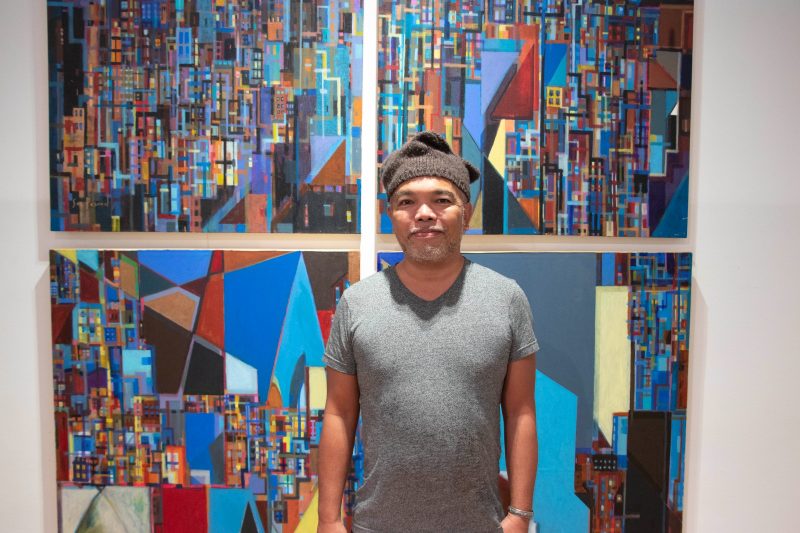
Unlike most artists who labor within the obedient confines of four walls, Popo San Pascual heeds a wilder summons. His studio breathes and rustles in a sprawling tropical forest in Tagaytay City, where light filters through tangled leaves and the air itself seems to paint. There, beneath green canopies, he works in the open, letting vines, bark, and shifting shadows offer their shapes to his waiting hand.
This primeval refuge recalls the dream-jungles of Henri Rousseau—those lush, improbable worlds where tigers slip silently through foliage and reclining figures dissolve into the riot of green, each leaf guarding a secret. In San Pascual’s forest, fantasy gives way to quieter surprises: the sudden glide of a snake, pausing as if to acknowledge the artist at home in its ancestral ground.
San Pascual first surfaced on the Philippine art scene in the Eighties as one of the “Chabet Babies,” a generation named after the formidable Roberto Chabet—thinker, provocateur, and keeper of daunting standards. Chabet’s presence was enough to empty classrooms; only the fearless stayed. It was during those years that San Pascual caught his mentor’s attention with a work born not of leisure but of urgency: a single, solitary chair. In that compressed moment of instinct and necessity, panic and clarity converged, and from it emerged an accidental minimalism—spare, honest, and arresting.
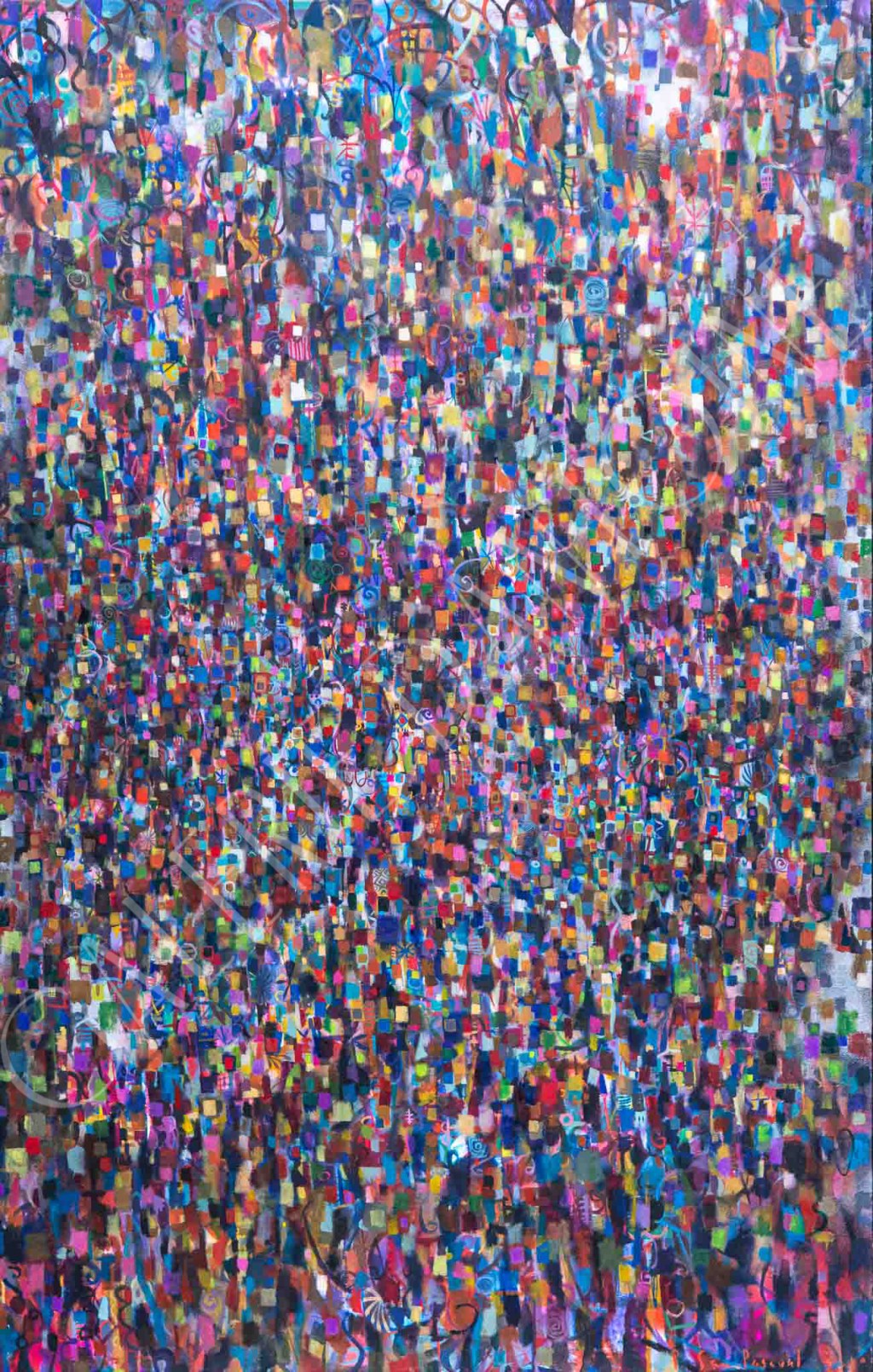
Time, however, expanded his vision. The emptiness of the lone chair gave way to abundance, as his canvases grew crowded with faces—layered, staring, overlapping, alive. Each surface became a chorus of gazes, unsettling yet magnetic. The shock of this visual excess, tempered by its strange intimacy, captivated audiences and left its mark on a younger generation, many of whom echoed his face-filled worlds in their own work.
Now in his later years, Popo San Pascual turns his gaze inward. Mortality lingers at the edge of thought, but it does not darken his days. Instead, he finds calm in creation, a quiet companionship with paint, forest, and time itself. In the shelter of his art, among leaves and memories, he continues—listening, observing, and making peace with the infinite.
Source: Cid Reyes
 Galerie D’Antoine