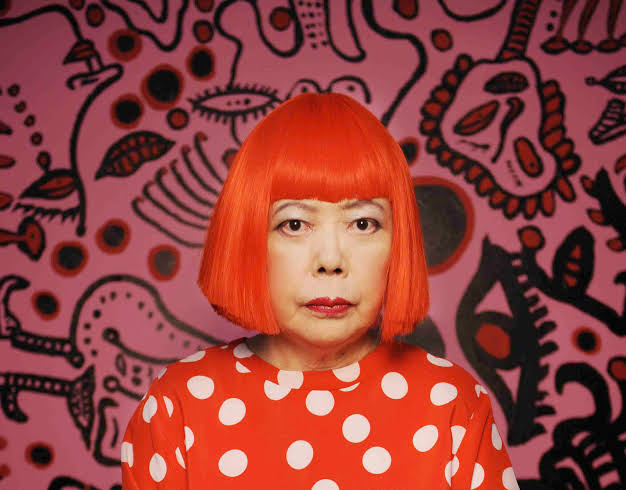
Yayoi Kusama was born in 1929, the youngest daughter of family from the mountainous region of Matsumoto in central Japan.
Her family made their living from the cultivation of plant seeds. There is still a plant nursery on the site of Kusama’s childhood home. She had a conventional upbringing, and when Kusama began to express enthusiasm in making art, her family were not wholly supportive. Her mother in particular discouraged her young daughter’s dreams of becoming a professional artist, trying to steer her instead towards the conventional path of a traditional Japanese housewife. But Kusama’s persistence was strong. When her mother tore her drawings away from her, Kusama made more. When she could not afford to buy art supplies, she used materials she found around the home.
After the outbreak of the Second World War, Kusama, like other school-age children in her hometown, was called upon to work for up to twelve hours a day in a parachute factory. Despite this punishing work, she managed to find the time and the resources to continue drawing.
usama began publicly exhibiting her work in group exhibitions in her teens and in 1948, after the War’s end, Kusama convinced her parents to allow her to go to Kyoto to study painting in the Japanese modernist Nihonga style. She continued her studies in Kamakura City but soon grew tired of the conventional approaches of her teachers. Her great ambition and talent were recognised when she began staging solo exhibitions in her home town in the early 1950s.
Kusama’s achievement as a woman artist, coming as she did from a traditional background in a conservative part of Japan in the early part of the twentieth century, cannot be underestimated. It was her own drive and confidence in her talent that enabled her extraordinary career.
Source: http://www.tate.org.uk
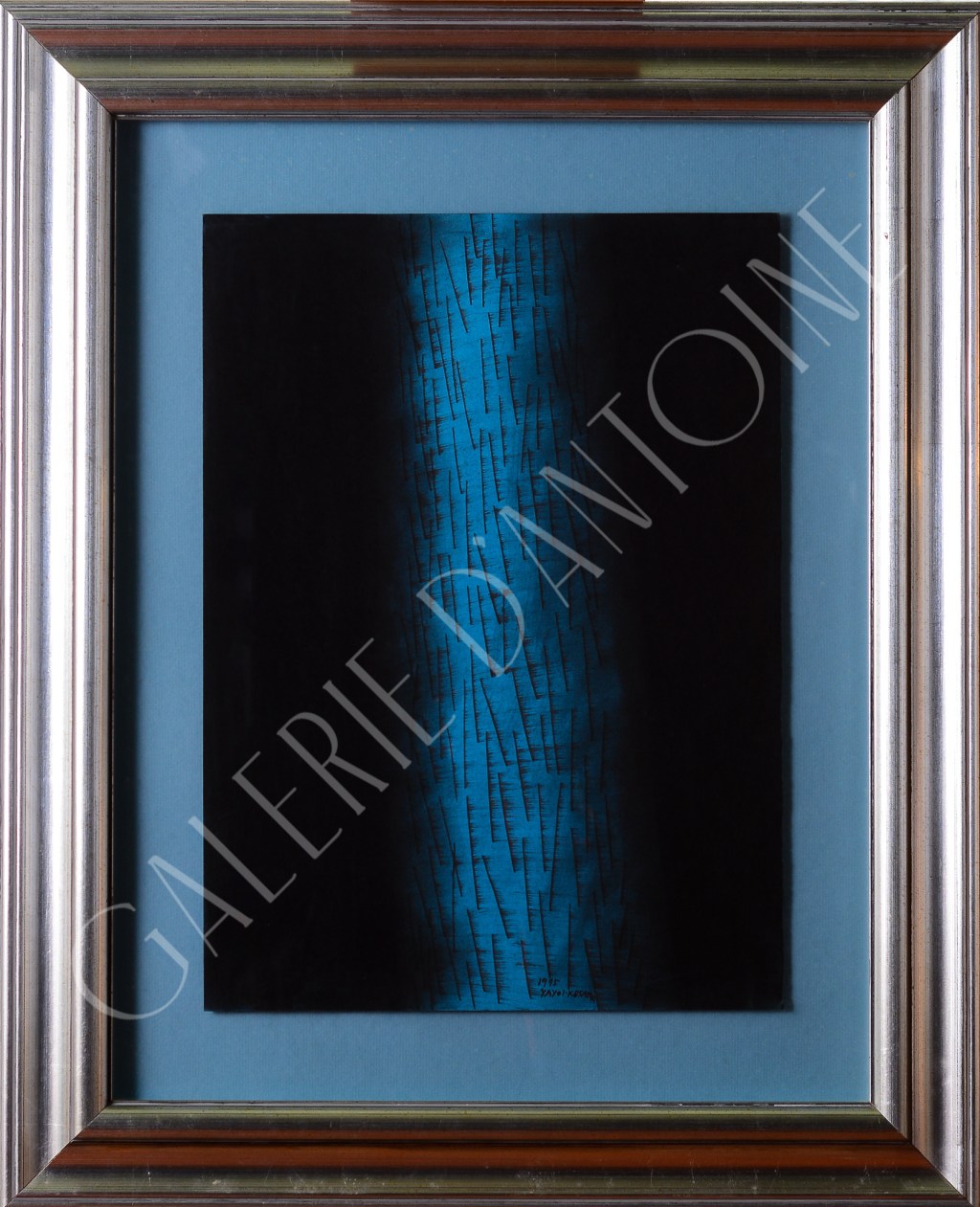
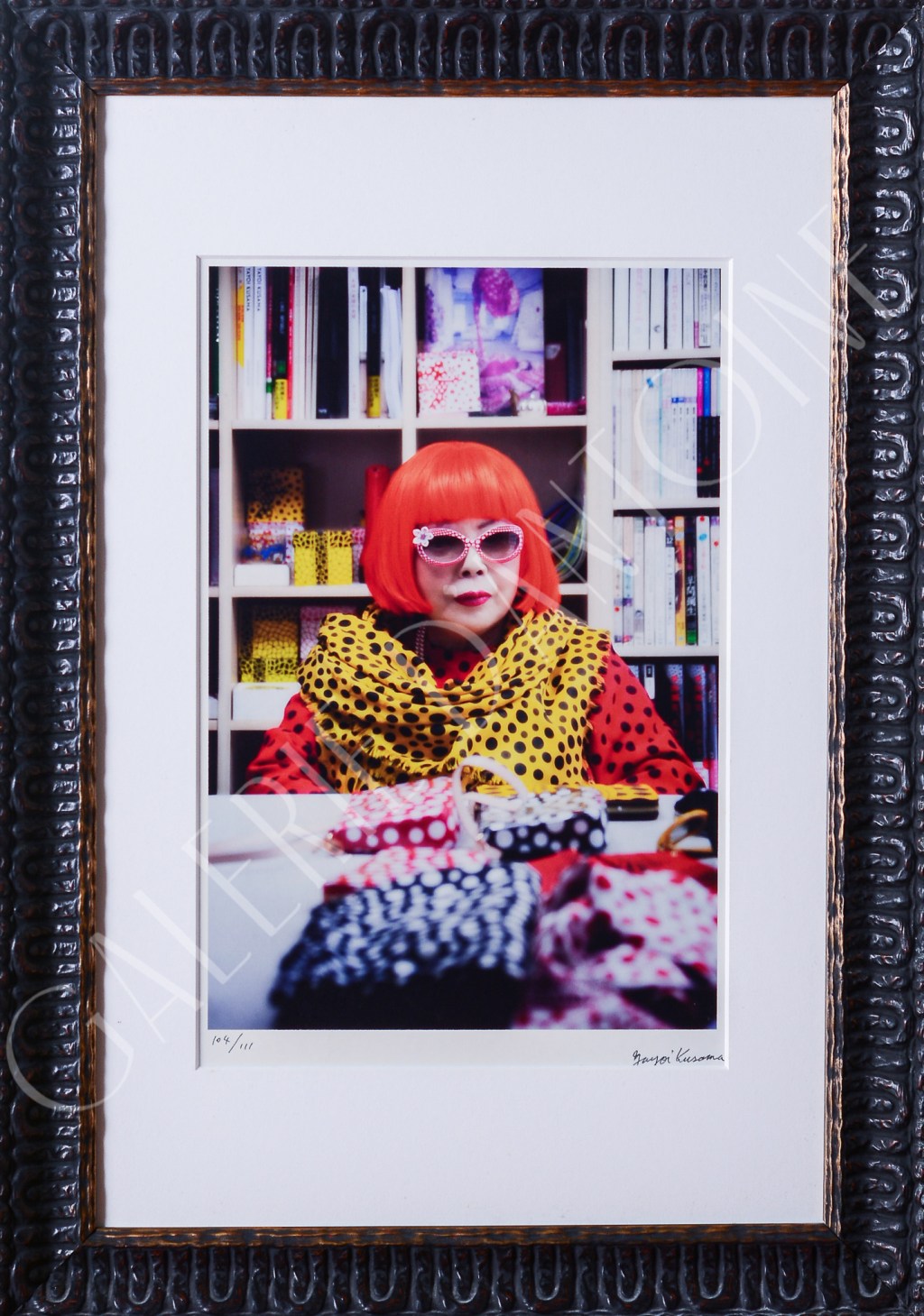
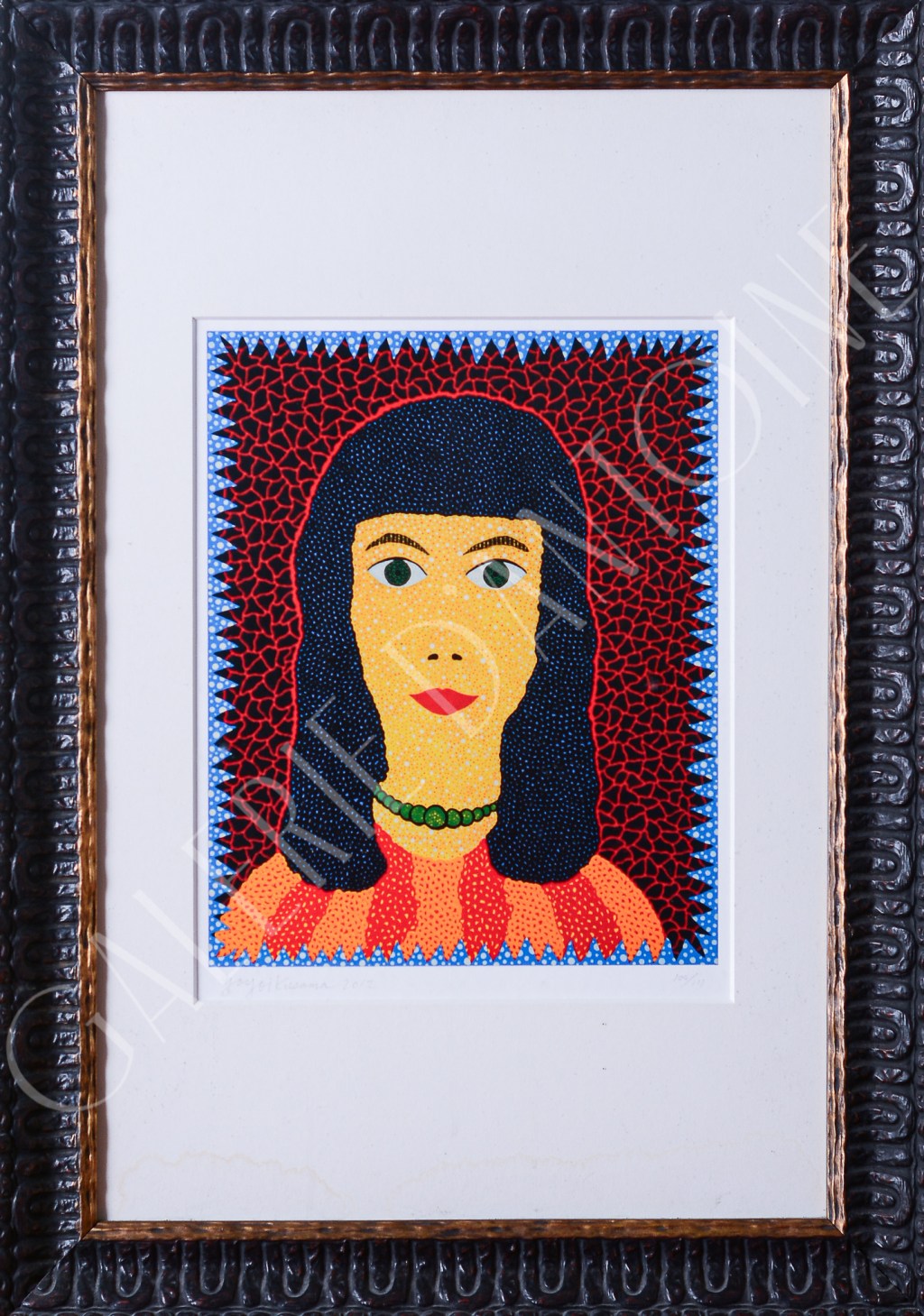

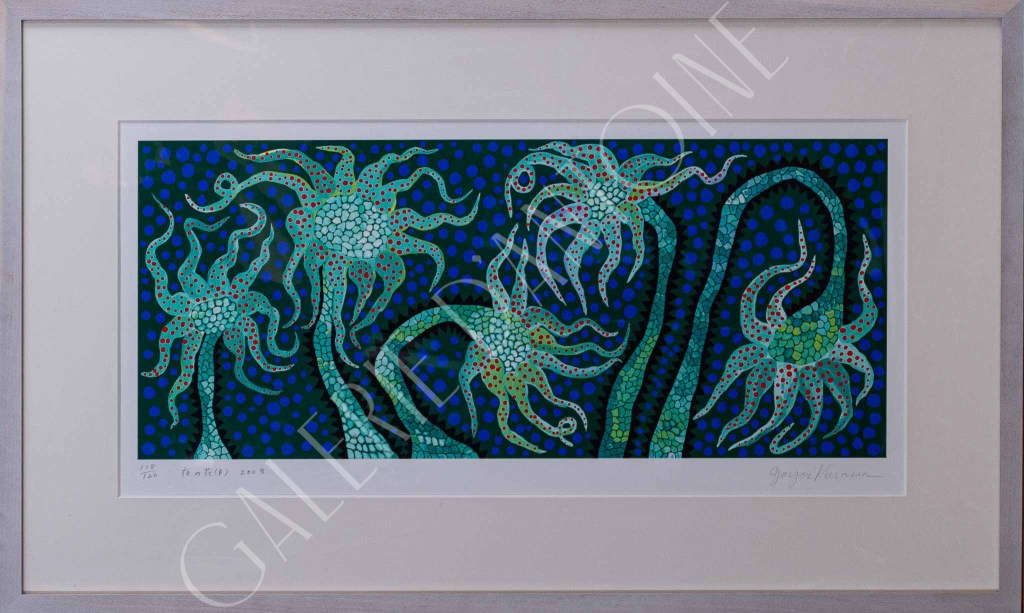
 Galerie D’Antoine