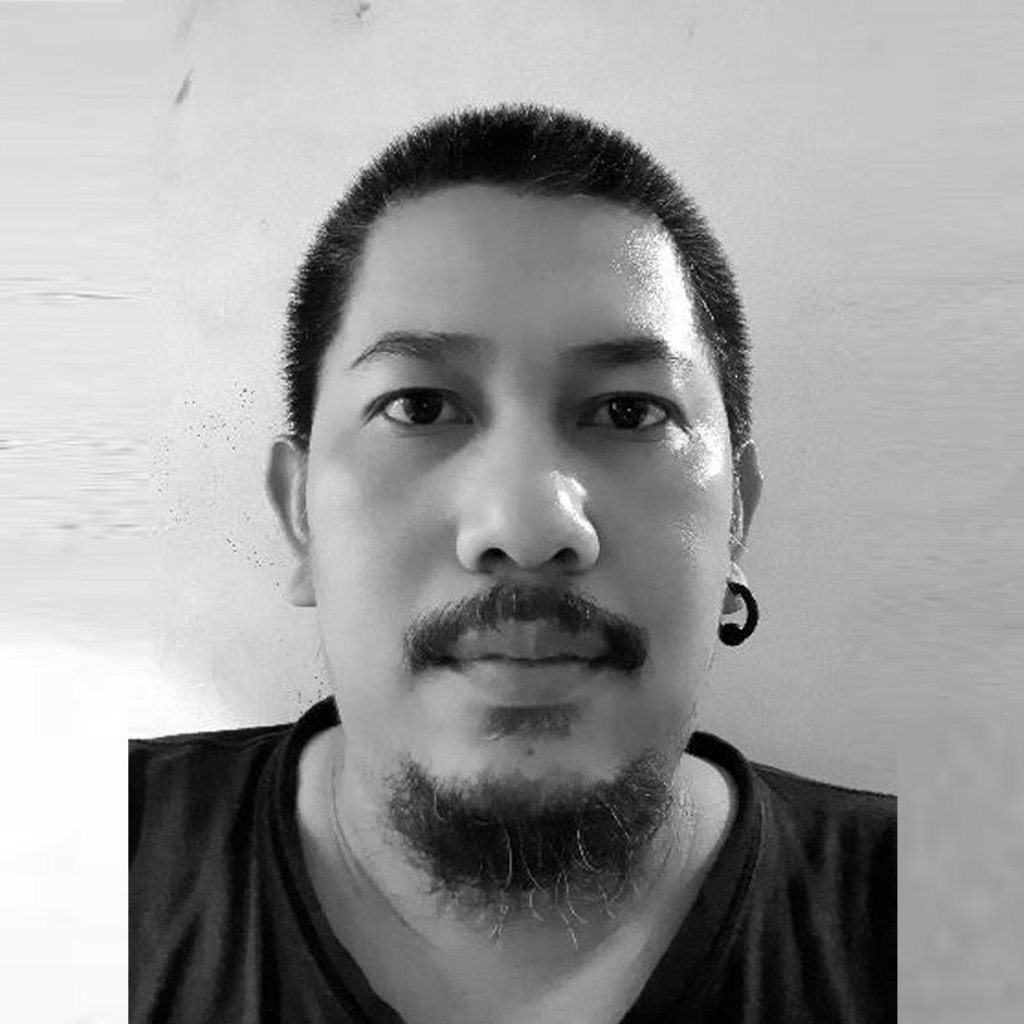
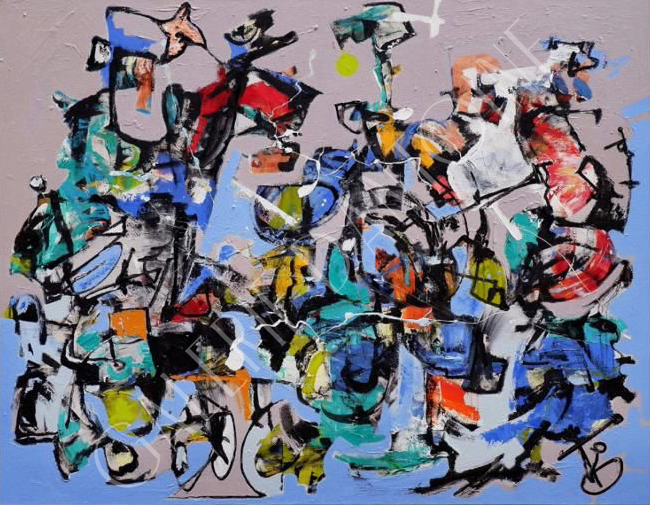
Fika Leon’s real name is Fika Arestya Sultan, born in May 1983. The “Leon” is an homage to his eponymous son, whom the artist credits as the impetus behind his painting practice. Fika Leon lives and works in Yogyakarta, a city in the south-central area of the Indonesian island of Java. Recently exhibited in international venues including in Miami, Los Angeles and Dubai, his art often depicts crazed, mask-bedaubed, shadowy creatures, wrapped in a dance-like cast, painted with expressive impasto skeins and strokes. He uses acrylic, enamel and silicone paint, layering varicoloured strips. To the Western eye, the work, with its centred, beaming or howling faces created in animated crimson, azure and hoary-white overlaid brushstrokes, may be redolent of US artist Jean-Michel Basquiat’s frenetic, neo-Expressionist dashes and daubs of the 1980s. In fact, Leon and other Indonesian artists of his generation are foregrounded by the complex legacy of nationalistic Modernist artist groups that formed during the Japanese occupation of Indonesia from 1942 to 1945.
This legacy is compounded by related groups like the Painters Front of 1945, and its successor, the Gelanggang group, which depicted the fierce, protracted battles around the West Javanese capital city Bandung at the time. At first glance, this historical back-drop may seem tangential to Leon’s work, characterised as the latter is by fantastical portraits of frenzied, toothy figures. But these antecedent Bandung painters paved the way for the vernacular that artists like Leon have adopted, one that takes the prismatic Western neo-Pop palette but also makes appropriative use of traditional motifs.
Source: Raw Vision
 Galerie D’Antoine