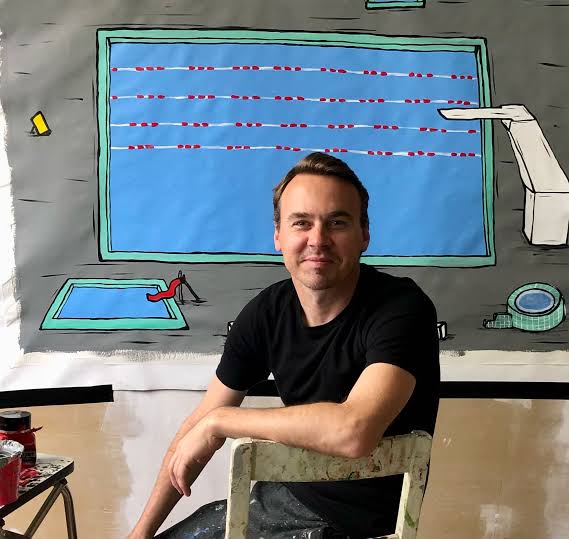
Albert Willem, a Belgian artist born in 1979, embarked on his artistic journey after a significant hiatus, rediscovering his passion for drawing in adulthood. Though self-taught, his early exposure to museums and galleries in Belgium had a profound influence, particularly the contemporary works he encountered, alongside the colors and dimensions of Abstract Expressionism. This foundation, combined with a reawakening of his artistic drive later in life—which he humorously describes as a “midlife crisis”—led him back to his practice with renewed urgency and support from his family.
Willem’s career development saw early engagement with social media, where he sought feedback and built an audience as an unknown painter. His work was first showcased at Hyde Gallery in Moscow, an exhibition that proved pivotal as it led to his discovery and subsequent representation by New York gallery Waterhouse & Dodd. This move allowed Willem to present his work within a more formal context, marking a significant step in his professional artistic trajectory.
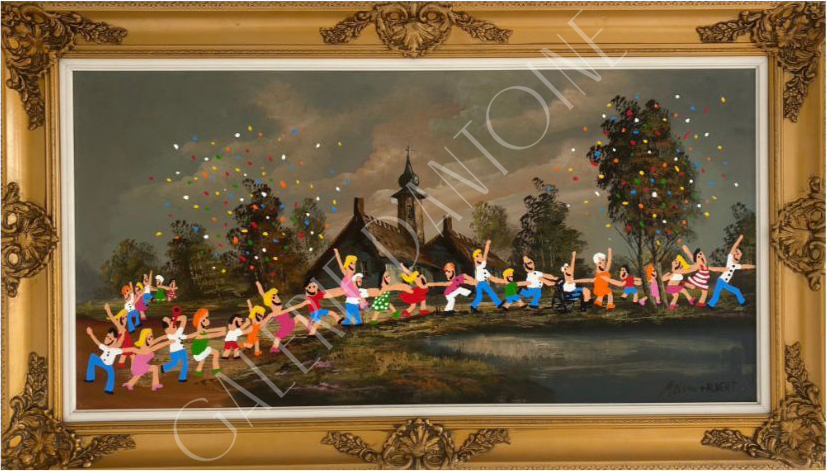
His artistic philosophy is deeply rooted in observation and a desire to connect with viewers through humor and relatability. Willem cites influences such as Pieter Bruegel the Elder for his human stories and scenic imagery, and Kent Iwemyr for his humor and simplicity. He intentionally avoids overly heavy or profound themes, instead striving to make people smile with his paintings, focusing on the inherent drama and humorous nuances of daily life. This approach underpins his commitment to creating accessible and engaging art.
Source: Google
 Galerie D’Antoine